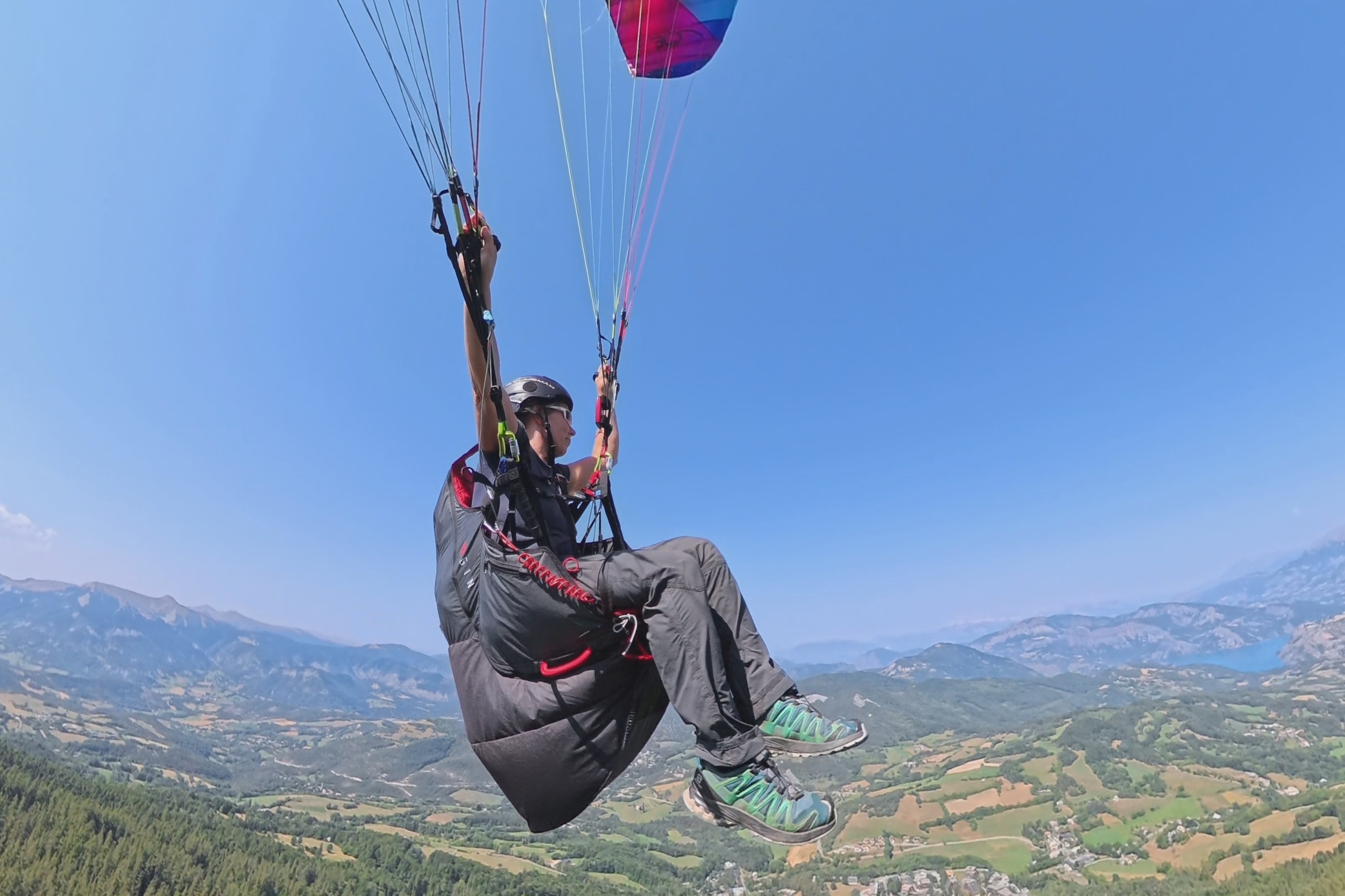
The definition of an open harness would be any harness without a leg cover or pod. Many call these a sit harness which is a suitable name as well. Although we 'sit' in all harnesses - we hardly see an extremely reclined position anymore as in early pods - the body position in a pod harness is a little more supine. But more on that later.
Reasons to fly an open harness
Pilots choose to fly an open harness for various reasons. Most schools traditionally use open harnesses with a seatplate for students. They are easy to use, cheap and durable. Add a bit of extra comfort and features and you have a standard open harness that is a good choice for any pilot.
Many hike&fly pilots choose open harnesses with or without a seatplate, because of their simplicity and often light weight. For soaring and speedriding, an open harness without seatplate is the obvious choice; a pod would just get in the way especially on the ground.
Acropilots always fly open harnesses. Your legs need to be down to reduce the risk of twisting during manoeuvres and the pod would just get in the way. Acropilots also prefer a seatplate over a split-leg seat for precise piloting in their manoeuvres. In fact, acro harnesses are popular for everyday use too because they are so comfortable, stable and durable.
Acro world champion Théo de Blic says: "I've done some acro with split-legs and it’s noticeably less stable and less comfortable. The second reason to choose a seatplate harness is weightshifting which is a lot less efficient on a split-leg. If a split-leg harness is the one you fly I'd recommend to do your SIV on it, but you will notice that in manoeuvres like stall it's harder to be stable." The same goes for pods: if that is your main harness, do an SIV on it to learn how to handle emergency situations.
For those who don't want to choose between open or pod, a few brands offer a modular harness including the Kortel Kuik III and the Supair Evo Lite 2. The latter is a regular open seatplate harness with the option of zipping on a pod. Clément Latour from Supair explains: "Pilots buy it when they think they are not ready for a pod and they will put it on when they are. It is versatile: you can use it open in morning for soaring and then zip on the pod for an XC flight later."
(...)
The full feature article was published in Cross Country magazine 261, October 2025.