1. What is cloudbase?
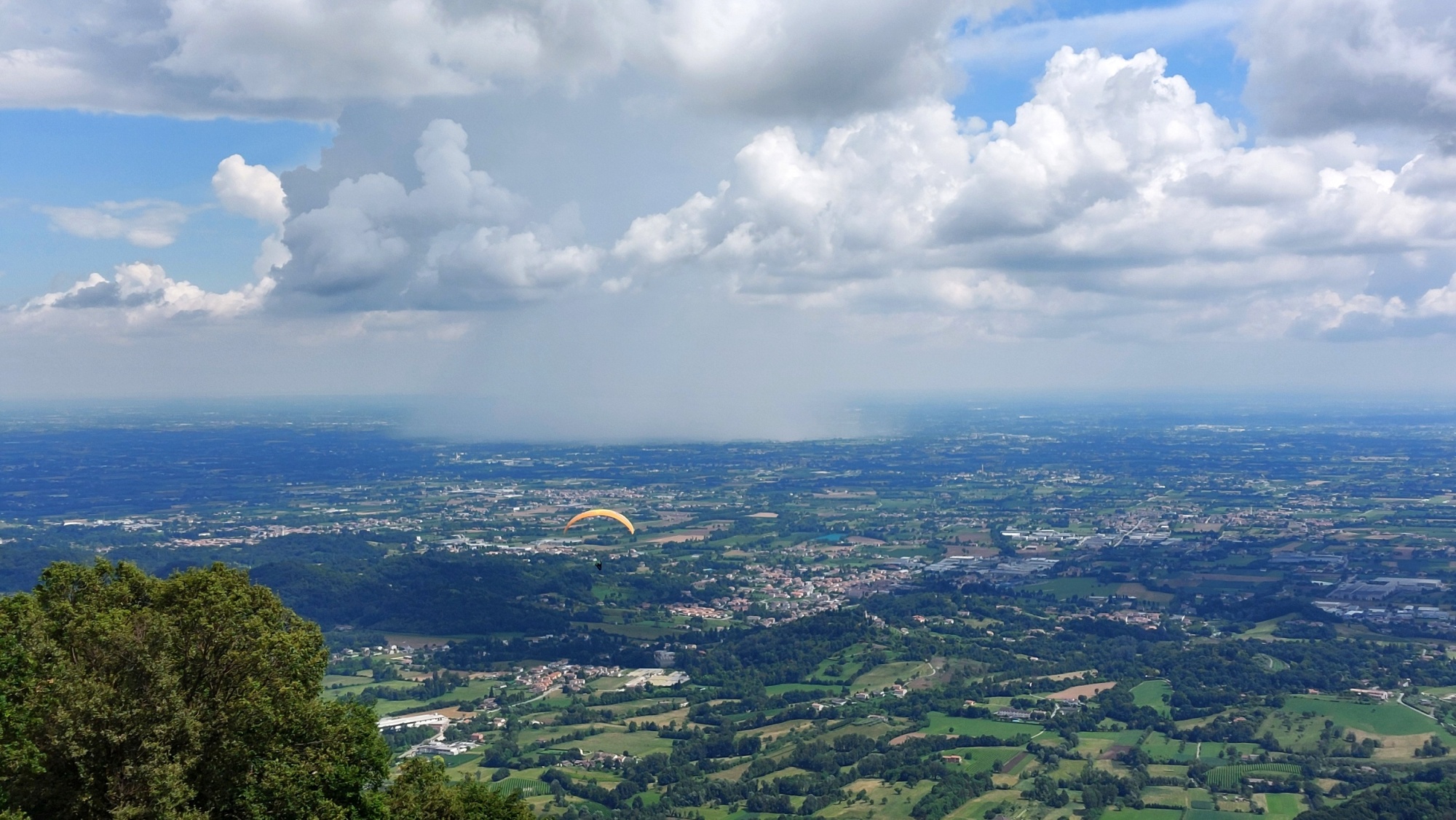
Cloudbase is where the bottoms of the clouds are. It is the top of the thermal and often the end of lift. Save some exceptions, cloudbase is the highest we can go without an engine. "Cloudbase is most of the time the top of the climb, though sometimes you can climb in the dry air next to it," explains Kelly Farina, XC guide and author at Mastering Paragliding.
Any cloud has a base but only the base of a cumulus cloud has anything to do with thermals, so we will focus on those. When a parcel of air releases from the ground and starts rising as a thermal, it expands and cools. At some height the air reaches its dewpoint, the temperature at which water vapour in the thermal starts to condense and form a puffy cumulus cloud. This height is cloudbase. The first milky wisps you see appearing are exactly that: condensing water vapour in the thermal revealing the location of its top.
While the cumulus cloud grows, it can take all kinds of shapes giving clues about the air at cloudbase. For example, where cloudbase looks the darkest grey this is the thickest part of the cloud, even though you may not be able to see the top or your view is distorted looking from the side. Sometimes cloudbase looks concave instead of flat on a large cumulus, revealing where the thermal is strongest. If you seem to have two different cloudbases in the air, you are facing two different air masses that have a different moisture content and therefore different dewpoints. This can happen where two valley flows meet; this is called convergence. The air can go nowhere but up, so convergence usually provides good lift.
These and other features tell you where to look for lift or what to avoid, as we shall see.
(...)
The full article was published in Cross Country magazine 262, January 2026.