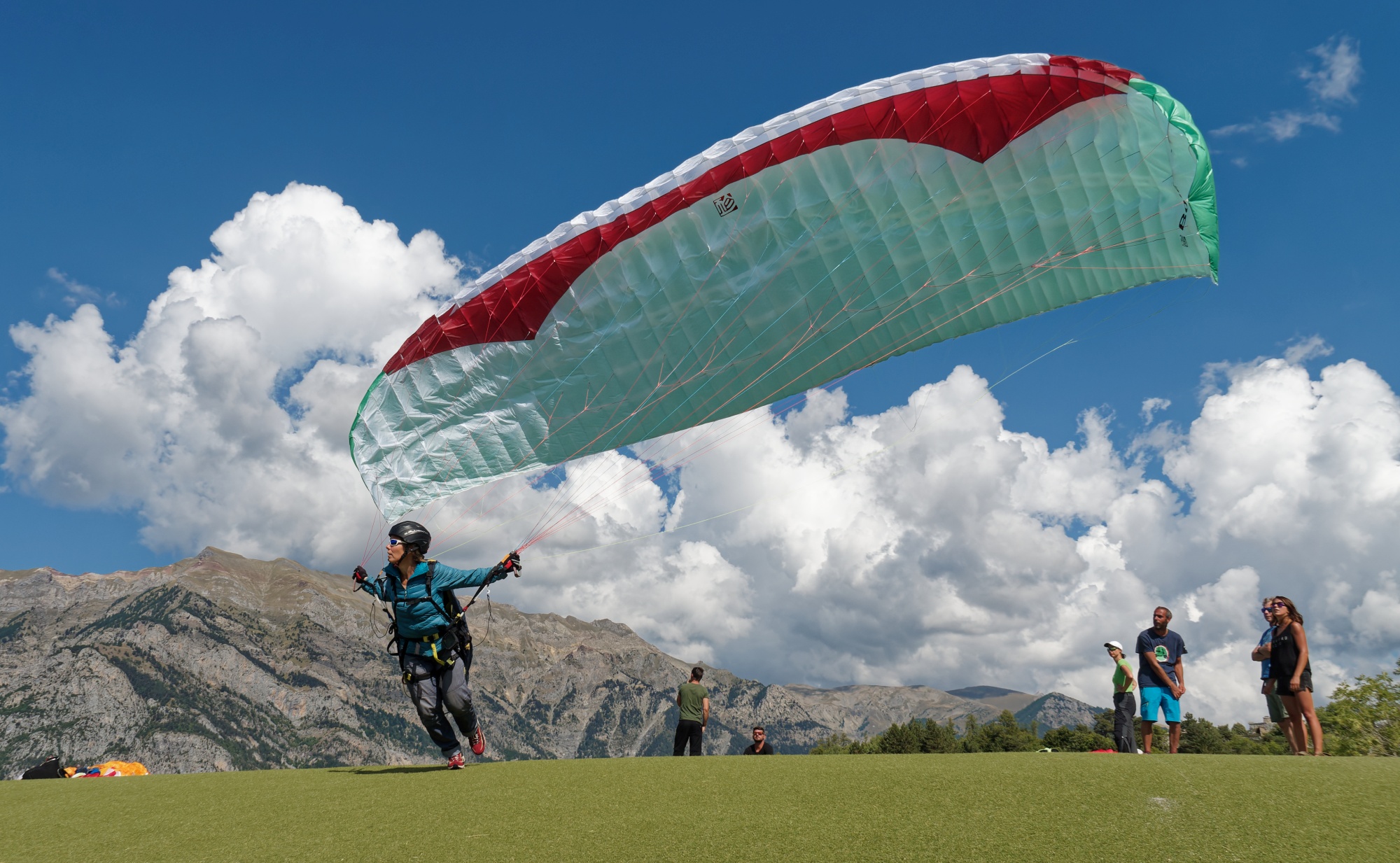
The A-class used to be the domain of school gliders. Flying bricks, boring, slow and sluggish to handle. But this is not true anymore. If any pilot is hesitant to fly an EN-A glider because of these memories they'd be surprised by the handling of a modern A.
And there is a lot more choice, as Phi's range proves. Analogous to the high-B class there is now a high-A or EN-A+ class and even a mid-A class. On top of that there are easy, fun and lightweight mountain gliders with an EN-A classification.
What makes an EN-A?
With so much on offer, what defines an EN-A glider exactly? The most the obvious is they have all passed the EN926-2 classification tests for paragliders and got an 'A' on all tests. These tests assess the recovery of the wing without pilot input, the so-called 'passive safety'.
In practice, passive safety puts restrictions on the design of an EN-A glider. For example, a wing with a high aspect ratio will be unlikely to get an A on all the tests, no matter the rest of the design details. What the aspect ratio limit is may change with the development of design technology, but at the moment there are as far as we know no EN-A rated paragliders with a flat aspect ratio above 5.3.
So, the passive safety as shown by the tests is the same for all EN-A gliders. But the active safety, how the glider reacts to pilot input, can vary quite a bit. Therefore, the target group of pilots for a school glider, an EN-A+ or a mountain glider is different.
(...)
This article was published in Cross Country magazine 263, February 2026.